
Phenomenon Based Learning: Student Curiosity Leads the Way
by Ruby Ondatje NOAA Chesapeake Bay Office, Science Education Intern
Have you ever walked along a beach or waterway and noticed a piece of trash? And then another, and another, and then you can’t stop seeing trash everywhere you look. Where is it all coming from?
Our world is full of phenomena like this. Some phenomena, like marine debris, are unwelcome, others are amazing, like periodical cicadas, and still others are events so common they are often overlooked, like a bee pollinating a flower, but all can spark curiosity and questions.
“Phenomena are observable events that occur in the universe and that we can use our science knowledge to explain or predict.”
- Stemteachingtools.org
Engaging with a local Phenomenon
Phenomenon based learning supports student engagement, systems thinking, and student-led investigation. This method can jumpstart a unit or lesson by engaging students with something puzzling. Engagement can be increased by sharing a local phenomenon that students can observe firsthand or may already have experienced. Phenomenon can be introduced in a variety of ways including: imagery, video, reading an eyewitness account, or data. The educator can pose a question to guide the study of the phenomenon. This question could range in complexity from a complicated inquiry of global systems to the mechanics of everyday occurrences. Once students have time to digest the question and consider their own questions, they can create initial models to start explaining the phenomenon.
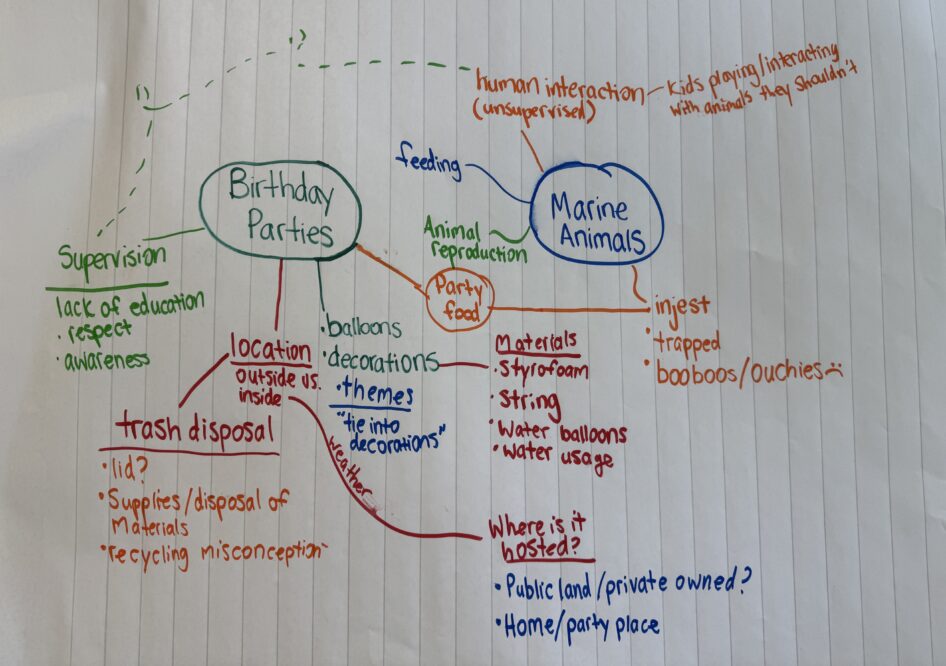
This model is meant to be revisited often, changing and broadening as students grow their knowledge. The model can take many forms such as flow maps, illustrations, charts and more.
Engaging? Check! Instead of starting a lesson or unit with definitions and background reading, students ponder a phenomenon that is relevant to their lives and community.
“The focus of learning shifts from learning about a topic to figuring out why or how something happens.”
- Stemteachingtools.org
Systems thinking and Student-led investigations
Working with models also promotes systems thinking. How could two seemingly unrelated things—birthday parties and marine animals—be connected? This approach encourages a student to investigate the context and different forces at play when learning about the phenomenon, bringing in opportunities to practice crosscutting concepts like recognizing patterns, cause and effect, and explaining systems.
Creating a model to explain a phenomenon will very likely lead to more student questions—which should be encouraged! Providing time and space for students to follow their curiosities, make discoveries, and dig into the questions and subjects they’re interested in can boost student investment and engagement and fuel student-led investigations.
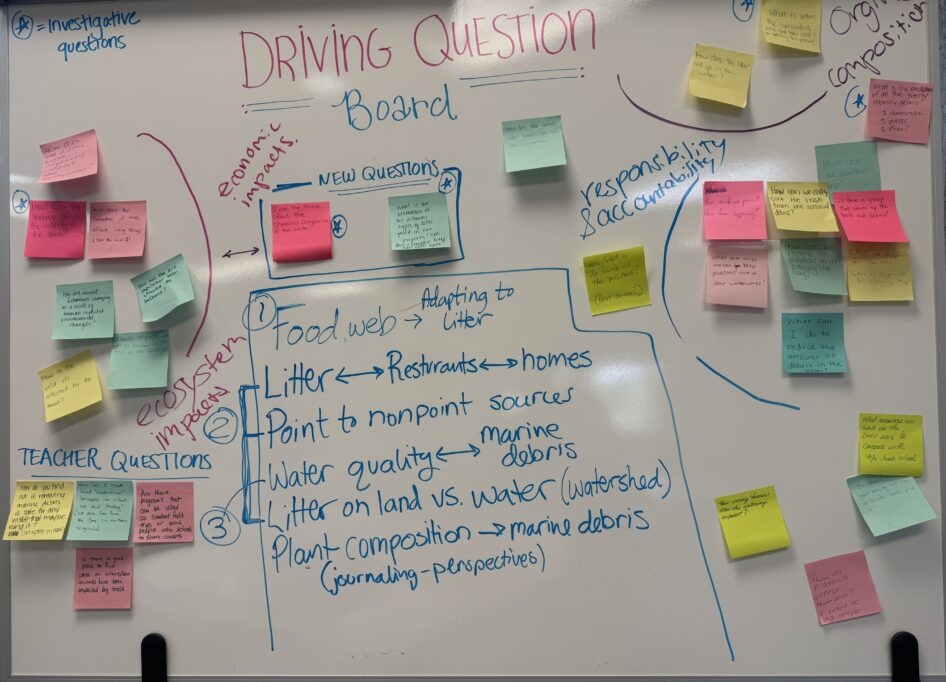
A driving question board is a great way for students to share their questions and work together to group similar questions and pull out ones they could investigate. Investigations can take many forms like online research, interviewing an expert, or conducting a classroom experiment or outdoor investigation. From asking questions to planning, conducting, and synthesizing an investigation, phenomenon based learning can encourage students to explore multiple subjects and gain a broader, more holistic set of knowledge that is connected to real world contexts. This type of learning strengthens 21st century skills like flexibility, critical thinking, problem solving, and collaboration.
Connecting with other teaching approaches
Using a local phenomenon can create an opportunity to incorporate place-based learning. This approach centers the learning within the student’s environment and community and a local phenomenon can be a great way to spark student engagement and development of their sense of place. Students can apply previous and recently acquired knowledge to explain the systems impacting the phenomenon and how society, the economy, and the environment interact. This can help connect complex concepts to local history and environment, bridging an opportunity for students to take responsibility for their learning and their community.
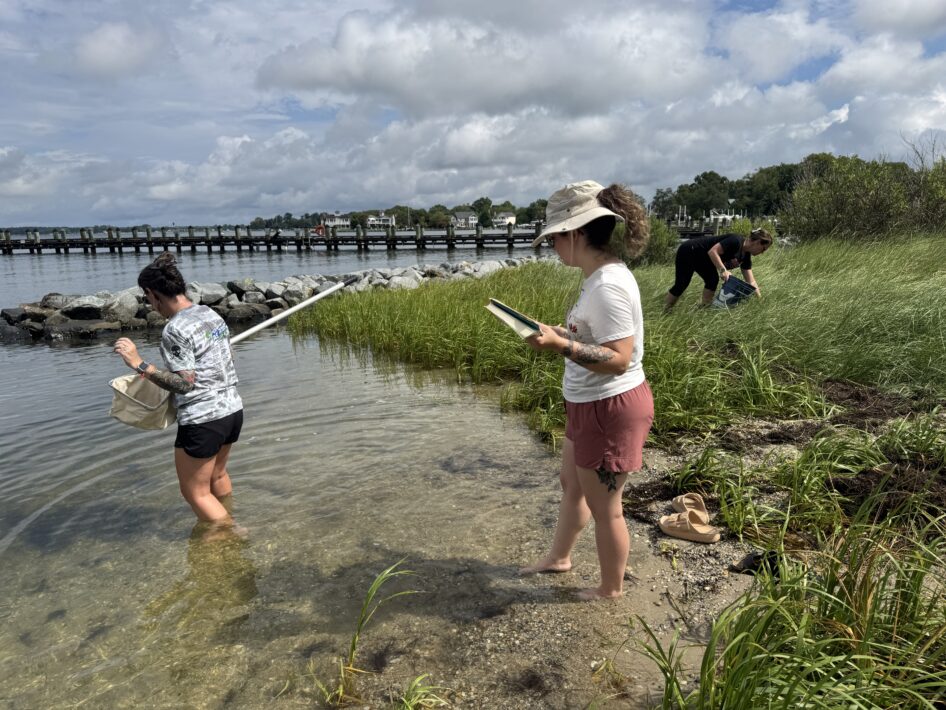
Phenomenon based learning can also be a transition into a full Meaningful Watershed Educational Experience (MWEE). A local phenomenon can be the focus of the MWEE’s Driving Question which is introduced during the Issue Definition portion of a MWEE. During this MWEE essential element, students do background research, make observations and complete investigations. MWEEs connect phenomenon based learning to outdoor learning through the outdoor field experiences portion of the MWEE which helps students get valuable outside time to investigate the issue in their environment and apply their inquiry skills! The MWEE framework would then set students up to take action on that phenomenon.
Finding Local Phenomenon
Ruby Ondatje was the Science Education intern with the NOAA Chesapeake Bay office and spent her summer of 2026 interviewing education leaders across the region and shadowing scientists to start a Mid-Atlantic Phenomena Database to support educators. The database includes a brief synopsis and potential guiding questions for each phenomenon as well as links to background information, data, imagery and educational resources. Each phenomenon also lists connections to science concepts, Next Generation Science Standards Disciplinary Core Ideas, and related careers.
Phenomenon based learning isn’t just another hook to grab the attention of students, it is a new way to support the problem solvers of tomorrow. As the demands of the modern world change, so will the preparation that students need. Phenomenon based learning creates well-rounded learning experiences for students, equipping them with the tools and curiosity necessary to understand and succeed in their environment.